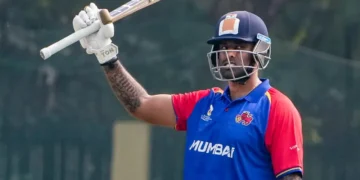



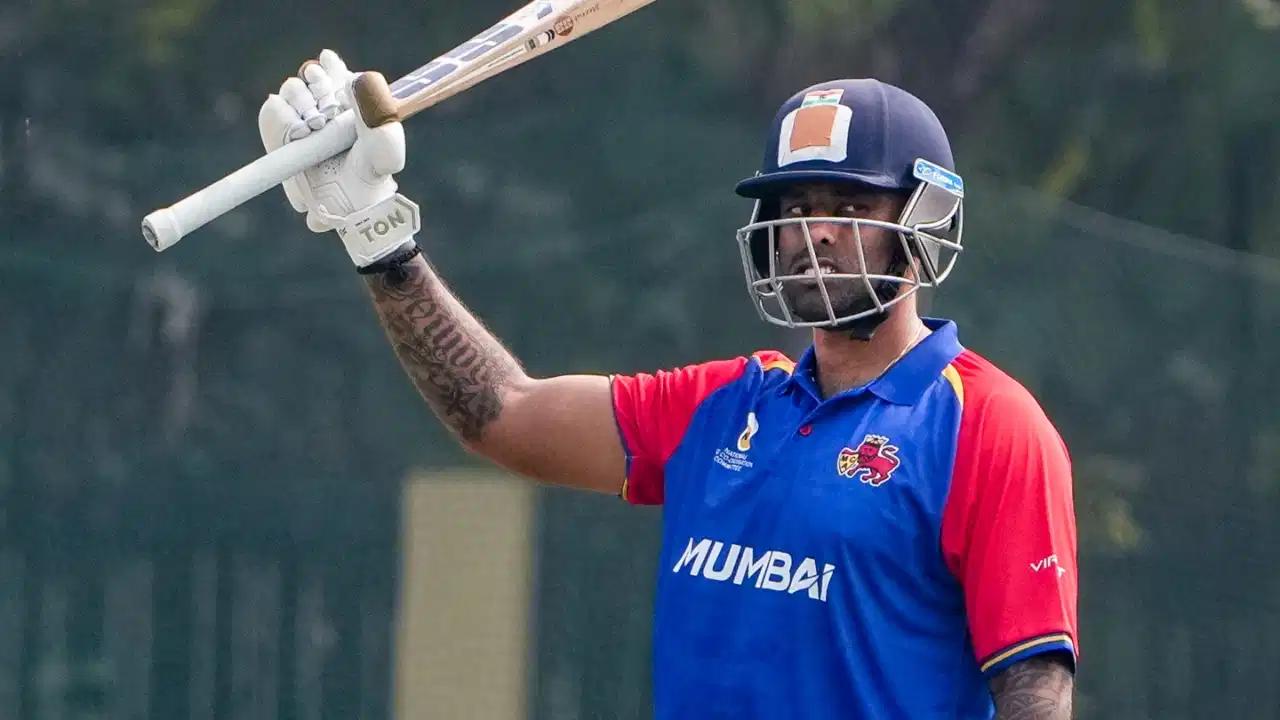
In the Syed Mushtaq Ali Trophy on November 16, 2026, Mumbai batsman Suryakumar Yadav entered the game while chasing a target of 198 and destroyed the Gujarat bowling attack with 82 runs off 29 deliveries. Mumbai won the tournament for the second time in a row by five wickets thanks to the 36-year-old’s incredibly free hitting, which included nine fours and seven sixes at a strike rate of 283.
But prior to this competition, Suryakumar Yadav had not been a part of the Indian squad for a while. He was removed from the national team and stripped of his T20I captaincy after a protracted batting slump. On March 8, 2026, he led India to victory in the T20 World Cup final, which they won for the second time in a row. This was his last international match.
Gujarat set a challenging goal of 198 after scoring 197 runs in 19.2 overs. Alongside Sarfaraz Khan, who scored a quick 40 runs off 17 balls with two sixes and five fours, Suryakumar Yadav anchored the innings as they chased that total. Mumbai finished the chase in the 16th over to secure a five-wicket victory as the two worked together to keep the necessary rate well within reach.
Earlier in the game, the Mumbai bowlers had set the stage. Against Gujarat, Shardul Thakur and Atharva Ankolekar each claimed three wickets, limiting the opposition to a total that ultimately proved insufficient against a batting lineup of this caliber from Mumbai.
What was demonstrated in Suryakumar Yadav’s previous SMAT innings against Hyderabad?
With an undefeated 60 off 21 balls against Hyderabad in his opening match of the Syed Mushtaq Ali Trophy 2026–2027, Suryakumar Yadav had already declared his return to form before taking on Gujarat. With six fours and five sixes, that innings had a strike rate of 285.71, which was slightly better than his performance against Gujarat.
Also Read: David Fulton Joins Kent as Director of Cricket
When combined, the two hits show the Mumbai batsman’s rapid and steady return to form. He was sidelined from the India team after the T20 World Cup victory in March 2026. The national selectors will have a lot of material to evaluate in advance of future T20I assignments thanks to the consecutive half-centuries, each of which was scored at a strike rate higher than 280.